Tuesday, June 7, 2011

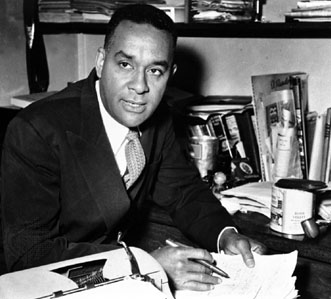
A Little Light Reading: "Native Son"

So I just finished Native Son, and I wanted to write down a few quick thoughts before I read any of the analysis included in the edition I have....


Overall, I liked it - aside from an overall heavy-handedness (which seems like a natural by-product of trying to create social commentary within fiction), the novel was compelling and thoughtful. The similarities to Crime and Punishment were stifling at times, although in order to take the book seriously I have to believe that this was intentional. There's no way that he hadn't read it - just the fact that the central characters are allegorical Christ figures in both books shows allusion rather than coincidence.

I wasn't sure what the conclusion was though - the last interaction with Max is ambiguous and seems to suggest that the communists don't actually hold all the cards, in spite of Max's impassioned and persuasive speech. Perhaps there's a difference between action and words being drawn here (although it seems counterintuitive to downplay the power of words as an author. The story of Crime and Punishment is one of redemption... and Native Son suggests that we, as a society, are so far from redemption that only a condemned man can accept this truth.

The quote that just completely stunned me was this:

"The wooden cross hung next to the skin of Bigger's chest. He was feeling the words of the preacher, feeling that life was flesh nailed to the world, a longing spirit imprisoned in the days of earth."

-p. 286

So succinct and beautiful in its assessment of Christianity (although for the purposes of the book, Christianity is all religion).

"And still when the delicate and unconscious machinery of race relations slips, there will be murder again."

"'Mr. Max, how can I die!' Bigger asked; knowing as the words escaped his lips that a knowledge of how to live was a knowledge of how to die."

"He could not talk about this thing, so elusive it was; and yet he acted upon it every living second."

This last quote suggests that the framework for Wright's understanding of the African-American experience is a Freudian one... which I'm not sure what to think about.

Anyway, brief thoughts - I'm no literary analyst, just pretending for a second that I am...

Monday, May 30, 2011

"Instead of a brain a cash register, instead of a heart a bottom line": Gender, Progress, and Capitalism in "Desk Set" and "You've Got Mail"

"The American Will inhabits the sky-scraper; the American Intellect inhabits the colonial mansion. The one is the sphere of the American man; the other, at least predominantly, of the American woman. The one is all aggressive enterprise; the other is all genteel tradition." 
- George Santayana, The Genteel Tradition in American Philosophy (1911)

After watching the film Desk Set (1957), starring Katherine Hepburn and Spencer Tracy, I expected to emerge a little more clever, a little classier, and even a little nostalgic. The film is "a bright and witty vehicle for its stars," as described by Dave Kehr - lighthearted entertainment, with the eloquent twist that Hepburn and Tracy so skillfully contribute. 


But instead I found myself distressed by the gender stereotypes reinforced within the film  - clearly, as it is a product of the 50s, this is not altogether a surprise. But if any actress from that era might stand as a feminist icon, it seems that Ms. Hepburn would be a choice candidate. The characters she portrays are typically career women - not just secretaries, but women whose intellect and work ethic has brought them to positions of some authority (Woman of the Year, Adam's Rib) or more frequently, women whose "headstrong" natures bring them into conflict with the contemporary status quo (Jo March; Mary Queen of Scots; a bevy of rebellious heiresses...). Although her intellect and independence is generally presented as atypical, she still acts as a more generous gauge of female potential - one that allows (and advocates) for women to be audacious, well-read, and self-reliant.


Few would fault Desk Set for the gender norms it perpetuates - it is very much a film of its era, the 1950s being a time when gender roles were more divided and codified than ever before. Yet, forty years after its debut, the same tropes were being marketed to women the world over through the seemingly infallible Nora Ephron (apparently romanticizing intelligence is a family affair - Nora's father Henry wrote the screenplay for Desk Set). Her films, which I will presume to crudely lump together, are thematically based on the idea that even in the world of neurotic, over-educated, liberal elites, there is still a place for romance. In other words, smart women, sassy women, which we all would like to believe we are, can and will find love - not even in spite of, but because of those traits. Of course, there's a catch.
So cute, so sassy, so... utterly powerless.
You've Got Mail is the Ephron movie that seems to most closely align with the problems that exist within Desk Set. Both films star a woman who is seemingly autonomous at the start - an expert in her chosen area (which of course involves books... already archaic in the 1950s), dissatisfied in romance but fulfilled by her job. These women, while seemingly ahead of their time in terms of both their workplace authority and independence, actually represent some very archaic values. Kathleen (of You've Got Mail) owns a children's bookstore, which she inherited from her mother - the gendered nature of these facts is difficult to ignore. She literally stands for family values - for nurturing and for carrying on a legacy. It is even suggested throughout the film that it is more important that she save the store because of its connection to her mother than because it is her livelihood.


Bunny (a name seemingly discordant with Hepburn's character) presides over a library (a typically female role) staffed entirely by women. The central conflict of the movie is when this idyllic area of isolation from the big bad business world (populated entirely by men) is suddenly upended by questions of efficiency and profitability (what would women possibly know about that?). This library stands as a bastion of good old fashioned American values - they answer questions about baseball and Santa's reindeer, recite The Song of Hiawatha and A Visit From Saint Nicholas and generally promote "the maintenance of the values implicit" in the American tradition through their preservation of the "American collective memory" (Gaul 1). 


The common thread is one of tradition, of feminine values, of sentimentality that overrides rationality. What these women value is the qualitative over the quantitative - that side of the American dream that is seemingly contradictory to the material success that is its most emblematic trait. And yet, these are our feminine role models. They are adorable, smart and yet hopelessly archaic. Their attractiveness is partially a result of the fact that they are separate from the ruthlessness of capitalism. In the face of its influence, their witty retorts seem feeble - but in a way that is attractive. "Meg Ryan is never so cute as when she's sassing the capitalist who loves her," just as Hepburn's intellect makes her attractive to Tracy - yet he ends up being right (Alleva). The realm for these women to be intelligent and autonomous is limited to that which makes them more attractive to men, or serves to protect American tradition.


The women who try to succeed in the male, progressive, capitalist realm are presented as devoid of all attractive feminine qualities. Rather, they are just presented as hysterical - essentially irrational in an unattractive, rather than attractive light. Parker Posey in Mail and Neva Patterson in Desk are both portrayed as utterly unappealing and completely desexualized. In these films, "'token women' in male dominated professions are viewed with suspicion not only by other women but also by the men with whom they compete for jobs" (Wyer). Their ambition is portrayed as craziness, which is how women who exist outside of what is socially accepted are generally depicted. Stupidity and superficiality are much less criminal in these films (see the other staff of the reference library) than desire to succeed in masculine and thus capitalist terms.


Capitalism is male, and thus success is male. That is the moral of these films, so perfectly described in the above quote from always prescient George Santayana. Kathleen loses her small business to the corporate machinations of the man she loves, and eventually realizes that "she is stronger bonded to him than she ever was as an independent proprietor" (Christensen 200).  Bunny is forced to coexist with the machine that will eventually replace her - and what is worse is both characters acquiesce to the desires of the men in their lives. Their sense of tradition and sentimentality (inherently female qualities, as they preserve the home, the family - all arational concepts) must be contained in little boxes, and assimilated into the larger plan for progress, created by men. Men are executives, scientists, and most of all, bastions of progress - a result of a Hegelian rationality that women can never understand.


In both films, the fast-paced dialogue and intellectual references between the leading couples disguise the inevitable reinforcement of gender hierarchy at the conclusion - the man was right all along, the woman loves him for it, and as a result will be assimilated into his progressive and efficiency-minded worldview. 

Sunday, March 27, 2011

On homework


So right now, I'm reading Blues People by LeRoi Jones (Amiri Baraka) for a class. It's making me absolutely furious. Totally. And. Completely. Now you might say, and with reason, 1) you are a complete asshole and 2) do you hate the academic repatriation of African-American heritage?

To which I might answer, 1) blame Columbia, and 2) no. However, the same academic standards and theories need to be applied to all critical analyses. Granted, the book is 50 years old. But when hearing someone cite exceptionalism on the basis of a cultural/contextual connection between a group of people and the resulting music/art, all i can say is music has never existed, except as a result of people. Basically, this isn't a unique course of events. At all. Sigh.

Rant over.

Saturday, May 22, 2010

Trekking About: Chincoteague, VA


To celebrate of the beginning of summer, my mother took me on a road trip to Chincoteague Island, VA. Although the weather was not super cooperative (which actually enabled copious viewing of say yes to the dress and what not to wear), I did manage to capture some of the gorgeous scenery to share with y'all. Yes, I just said that. The South is clearly having an impact on me.
What I could not capture was the super hardcore southern hospitality (it's real!). As a born and raised Seattlite, i found it disconcerting, although not altogether unpleasant. I just honestly don't understand how people can be so nice all the time... maybe it's all the butter they eat? Everything did taste a little better down there...


Anyway.


Photos.


They have sand, surf, and sun...


And kites.


Clearly, I had to soak it all up.


They also have lovely woodland wilderness (so many deciduous trees!)... with wild ponies!


And turtles!


And butterflies!

And baby ponies :)


Aw.

And to top it all off, I discovered my dream job - 


Who wouldn't want to be the pony chairman?

All in all, very pretty and so relaxing... right now I'm just trying to cling to the smell of the ocean, the sound of the waves, and the sight of billions of stars.